India’s Goods and Services Tax (GST) reforms are quietly transforming one of the country’s largest manufacturing sectors: the auto industry. As policymakers continue to rationalize rates, simplify compliance and reduce tax-induced distortions, original equipment manufacturers (OEMs), component suppliers and global buyers are recalibrating production and sourcing strategies. For readers in the USA and Canada, these changes matter—shifts in competitiveness and supply-chain stability in India can influence sourcing decisions, investment opportunities and the global auto market.
How GST Reforms Are Reshaping India’s Auto Industry
The Indian auto sector has long been constrained by fragmented indirect taxes and an “inverted duty structure” that often made components costlier than finished goods. GST’s introduction simplified many of these frictions, and subsequent reforms have targeted specific pain points: rate rationalization, clearer product classification and measures to ensure phased input tax credit flows. Together, these steps are reducing cascading taxes and improving cost transparency for manufacturers of cars, two-wheelers and heavy vehicles.
Beyond headline rate changes, administrative reforms—like expanded e-invoicing, streamlined return filing and more consistent e-way bill rules—have reduced compliance costs and uncertainty. For automakers with complex vendor networks, easier credit reconciliation and reduced administrative burden translate into lower working capital requirements and faster production cycles. That efficiency boost is particularly valuable for high-volume plants supplying global markets.
Finally, GST reforms influence investment flows and long-term strategy. When tax regimes are predictable and paperwork is digital, multinational OEMs and tier-1 suppliers are likelier to expand greenfield capacity or shift assembly lines. Over time, this can strengthen India’s role as a regional manufacturing hub and a growing export base for North American auto makers seeking diversified sourcing beyond East Asia.
Tax Cuts, Compliance Changes and Supply Chain Effects
Recent GST Council decisions have prioritized rate rationalization to address mismatches between parts and finished vehicles, easing an important drag on component makers’ margins. Where previously tax rates or classifications created cost anomalies, ongoing reforms aim to align levies with real-world production flows. The result is a more level playing field for domestic suppliers and newcomers alike.
Compliance modernization—such as mandatory e-invoicing for larger taxpayers and simplified monthly filing schemes for small businesses—has improved invoice reconciliation and reduced disputes over input tax credits. For auto suppliers with thin margins, faster credit realization reduces financing costs and can improve cash flows across supplier tiers. This is critical in an industry where small vendors supply parts for just-in-time assembly lines.
Supply-chain impacts are visible: lower indirect tax friction has encouraged consolidation of distribution networks and more intra-state movement of parts without excessive tax layering. Logistics companies see fewer tax-induced border delays, while manufacturers can better centralize warehousing and use just-in-time strategies. For North American buyers, this means Indian suppliers may become more reliable partners for components and sub-assemblies.
Impact on OEMs and Auto Component Makers
OEMs are recalibrating pricing and localization strategies as GST clarity reduces uncertainty. With tax-induced cost distortions narrowing, some global automakers are accelerating local sourcing to benefit from lower landed costs and to reduce currency and shipment risks. Greater predictability also supports long-term contracts between OEMs and local suppliers, improving planning and capacity utilization.
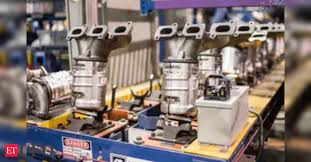
Component makers are one of the biggest beneficiaries: standardized tax treatment and easier access to input tax credits improve margins, enabling more reinvestment in automation and quality improvements. Smaller suppliers can now invest in capacity expansion with greater confidence, which strengthens the domestic supplier ecosystem and lessens dependence on imported parts for certain product lines.
However, adjustments can be uneven. Businesses that previously relied on tax arbitrage or were accustomed to regional exemptions may face short-term revenue pressure. The overall industry effect remains positive, but companies must adapt quickly—investing in IT, compliance teams and cost-management tools to capture the benefits of GST reform.
Evolving Electric Vehicle Market and GST Incentives
India’s push toward electric mobility intersects closely with GST policy. Policymakers have used tax levers to encourage EV adoption—through lower indirect taxes on components like battery cells, chargers and certain EV models—while continuing to support demand-side incentives. This helps domestic EV manufacturers reduce costs and scale production faster.
For battery and component suppliers, predictable GST treatment reduces the risk associated with large capital investments in gigafactories and new manufacturing lines. A clearer tax landscape encourages technology transfer and joint ventures, potentially attracting capital from North American firms keen to access India’s growing EV market as both a domestic and export base.
Consumers stand to benefit as well; lower taxes or simplified credit pass-through can reduce end prices for EVs and charging infrastructure. That contributes to broader EV adoption, which in turn creates economies of scale that further lower component costs and accelerate industry transformation.
Cross-Border Trade and North American Implications
North American companies sourcing from India should monitor GST-driven cost shifts closely. As India becomes more tax-transparent and competitive, U.S. and Canadian OEMs and suppliers may find it advantageous to diversify supply chains, reduce lead times and hedge geopolitical risks by adding Indian vendors to their procurement mix. This is particularly relevant for non-critical components and standardized sub-assemblies.
Investment flows could pick up as well. With clearer GST rules, joint ventures and greenfield investments face fewer compliance surprises, making India a more attractive destination for manufacturing partnerships. For Canadian and U.S. firms focused on EV supply chains, India’s large market and evolving policy support offer a compelling case for collaboration.
Trade policymakers and corporate procurement teams should still account for duties, logistics costs and bilateral trade policy when comparing suppliers. GST reforms lower one important source of friction, but they are part of a wider calculus that includes quality, lead-times and strategic fit.
Compliance, Technology Adoption and Future Outlook
The push toward digital compliance—e-invoicing, automated reconciliations and harmonized returns—has nudged the auto industry to upgrade ERP and finance systems. Companies that invest in these capabilities will benefit most from faster input tax credit cycles and reduced audit exposure. This digital modernization also supports better data-driven decision-making across procurement and production planning.
Looking forward, further GST rationalization may be necessary to support India’s ambitions as a global auto manufacturing hub, especially in EVs and advanced components. Continued alignment between fiscal policy (like PLI schemes) and GST measures could accelerate localization and export competitiveness. Industry stakeholders should engage constructively with policymakers to ensure reforms balance revenue needs and growth objectives.
For stakeholders in the USA and Canada, the takeaway is clear: India’s GST reforms are making its auto ecosystem more efficient and investment-friendly. Staying informed and proactive about these changes will help North American firms identify sourcing, partnership and investment opportunities that arise as India scales its automotive ambitions.
GST reforms are reshaping India’s auto industry by removing tax distortions, improving compliance and enhancing supply-chain efficiency. These changes strengthen the case for India as an export and manufacturing base while accelerating the shift to electric mobility. For North American readers, the evolving GST landscape signals new sourcing options and partnership opportunities—provided companies adapt to the regulatory and technological shifts that accompany the reform.
FAQ
Q: How do GST reforms reduce manufacturing costs in India?
A: By rationalizing tax rates, ensuring consistent classification and enabling faster input tax credit realization, GST reforms remove cascading taxes and lower working capital needs, which together reduce the effective cost of manufacturing.
Q: Will GST changes make India a viable alternative to China for auto sourcing?
A: GST reforms improve India’s competitiveness, but sourcing decisions also depend on labor costs, supply-chain maturity, tariffs and logistics. India is increasingly a viable complement to other sourcing countries, especially for specific components and EV-related parts.
Q: How should North American companies respond to these reforms?
A: Evaluate supplier risk and cost comparisons with refreshed assumptions about Indian tax treatment, consider pilot sourcing projects, and explore partnerships or joint ventures—while investing in compliance checks and supply-chain visibility tools.