India’s automobile component industry has officially crossed the $80 billion mark, marking a major milestone for one of the country’s most strategically important manufacturing sectors. This growth reflects rising global demand, expanded exports, and rapid technology adoption across traditional and electric vehicle supply chains. For readers in the USA and Canada, the milestone signals stronger sourcing opportunities and deeper trade ties with a competitive supplier base.
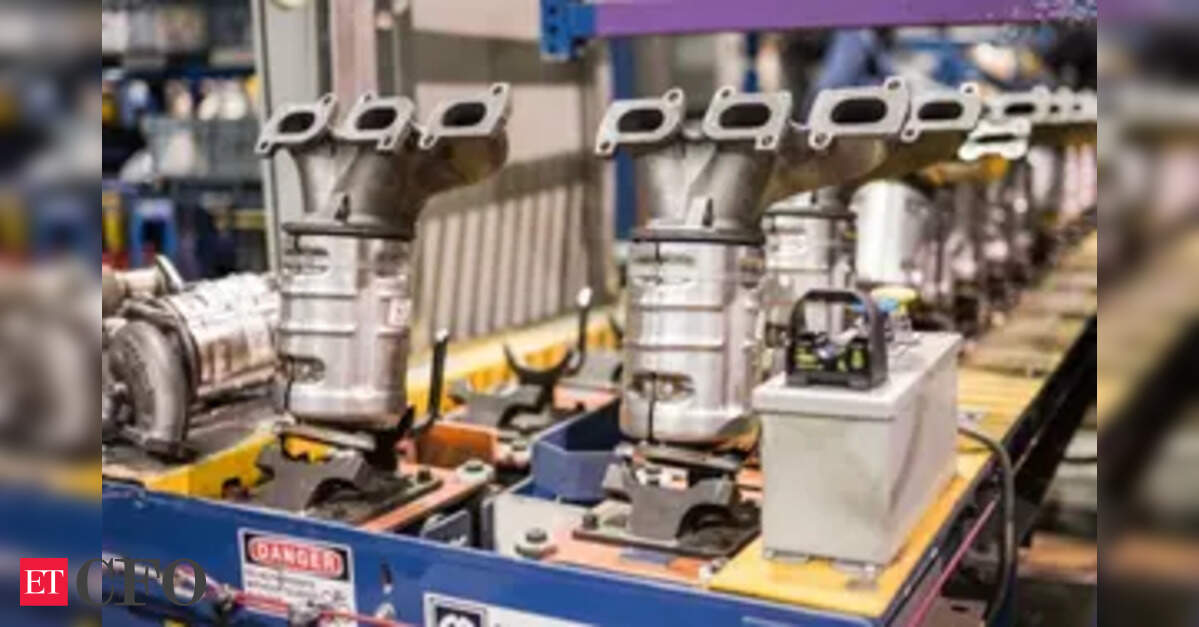
India’s Automobile Component Industry Surpasses $80 Billion
India’s auto parts sector reaching $80 billion underscores a steady climb fueled by scale, cost-competitiveness, and a broad supplier ecosystem spanning tier‑1 to aftermarket players. The figure combines domestic sales and burgeoning export volumes, reflecting healthier OEM production and a recovery in post-pandemic vehicle markets. Analysts cite modular manufacturing and clustering around industrial hubs as drivers of improved productivity and margins.
For North American buyers, this milestone means access to a wider range of competitively priced components that meet global quality standards. Many Indian suppliers now hold IATF and OEM approvals, allowing smoother integration into US and Canadian supply chains. Additionally, increasingly mature logistics and trade facilitation measures have reduced lead times for bulk shipments to ports serving the Americas.
The $80 billion benchmark also attracts fresh capital from private equity and strategic global suppliers seeking joint ventures and acquisitions. As Indian firms expand capacity and upgrade to Industry 4.0 practices, their ability to serve complex assemblies and electronics-heavy modules improves — a necessary step for competing in higher-value segments such as ADAS and EV drivetrains.
Growth Drivers, Exports, and Tech Trends Shaping Future
Strong domestic demand combined with export diversification has been central to growth. While traditional markets like Europe remain significant, North America has become a faster-growing destination for Indian-made parts, particularly in components such as braking systems, forging, and seating. Favorable exchange rates and competitive labor costs have made India a preferred nearshore alternative for some buyers looking beyond East Asia.
Technology trends are reshaping product portfolios: suppliers are investing in EV components, battery packs, power electronics, and software. The shift toward electrification has accelerated R&D spending and collaborations with global tech firms. Startups and established suppliers alike are developing modular battery systems, thermal management solutions, and motor controllers tailored for small- and mid-sized EVs, which are increasingly sought by emerging markets and fleet operators.
Sustainability and digitalization also loom large. Plant automation, additive manufacturing for rapid prototyping, and data-driven quality control are becoming standard. At the same time, companies are pursuing greener inputs and waste reduction, responding to buyer requirements in the USA and Canada where ESG considerations increasingly influence procurement and certification.
Export Markets and North American Demand
Export-led expansion has been a cornerstone of the industry’s rise. India’s parts exports now span passenger cars, two-wheelers, commercial vehicles, and aftermarket products, with higher-value assemblies making up an increasing share. North American importers are tapping India for steering systems, HVAC components, and castings where price-performance balances favor Indian production clusters.
Trade ties with the USA and Canada have strengthened via business delegations, trade shows, and supplier development programs. Indian suppliers are setting up local offices, joint ventures, or service centers to meet aftersales and warranty expectations, thereby addressing past concerns over lead times and responsiveness. This local presence improves trust and streamlines qualification for OEM contracts.
While tariff and regulatory alignment still pose occasional hurdles, preferential trade discussions and bilateral business forums are helping to smooth entry. For fleet operators and aftermarket distributors across North America, India’s scale and improving compliance with safety and emissions standards present new sourcing options without sacrificing quality.
Investment, Policy Support, and Domestic Supply Chain
Government incentives and policy support have been instrumental in scaling capabilities. Initiatives such as production-linked incentives (PLI) for automotive and EV components, along with state-level investment facilitation, have reduced capital costs and accelerated plant expansions. These measures encourage localization of critical subcomponents and increase the domestic value-add in complex assemblies.
Domestic supply chain depth continues to improve, but gaps remain in semiconductors, advanced catalysts, and some high-grade alloys. To address this, both public and private investments are targeting upstream capabilities and raw material processing. Strengthening these links makes the industry more resilient to global shocks and improves confidence among international OEMs assessing long-term partnerships.
Financial flows into the sector — from private equity, foreign direct investment, and debt — are enabling modernization projects and joint development agreements. For North American partners, this investment signals a reliable long-term supplier base capable of absorbing technology transfers and meeting evolving regulatory specifications.
Technology Adoption: EVs, Software, and Advanced Manufacturing
The transition to electric mobility is a major catalyst for product innovation. Indian suppliers are rapidly developing motors, controllers, battery management systems (BMS), and thermal modules, repositioning portfolios from purely mechanical parts to electro-mechanical and software-integrated products. This pivot is essential as OEMs in the USA and Canada demand components compatible with North American standards and cycles.
Software and electronics integration is another frontier. Suppliers are building competencies in embedded systems, OTA updateability, and cybersecurity for vehicle components, enabling participation in higher-margin software-defined vehicle architectures. Collaborative R&D with universities and global tech firms is fueling these capabilities and accelerating time-to-market for new modules.
Advanced manufacturing techniques — robotics, digital twins, and precision machining — are reducing unit costs and improving consistency for complex parts. As Indian plants adopt these technologies, quality parity with established global suppliers strengthens, making India an increasingly attractive source for critical components used in American and Canadian vehicles.
Challenges Ahead: Raw Materials, Global Competition, and Talent
Despite the upbeat trajectory, challenges persist. Volatility in raw material prices, especially for steel, aluminum, and battery-grade inputs, can squeeze margins and complicate long-term contracts. Dependence on imports for some high-tech elements, including semiconductors, remains a structural vulnerability that companies and policymakers are working to mitigate.
Global competition is intensifying as Southeast Asian and Eastern European suppliers also vie for contracts in North America. Indian firms must continue upgrading compliance, reducing lead times, and enhancing service levels to retain and grow export market share. Differentiation through niche capabilities and reliable quality will be key.
Talent and skill development are another area of focus. Building a workforce proficient in electronics, software, and advanced manufacturing requires sustained training programs and industry-academia collaborations. Addressing these human capital needs will help the industry move up the value chain and sustain growth beyond the $80 billion milestone.
Crossing the $80 billion threshold is a defining moment for India’s automobile component industry, reflecting not just volume growth but qualitative shifts toward electrification, digitalization, and export maturity. For businesses in the USA and Canada, this opens new sourcing opportunities and partnership avenues, while also signaling the need for closer collaboration on standards, innovation, and supply-chain resilience.
FAQ
Q1: What factors pushed India’s auto component industry past $80 billion?
A1: The milestone reflects a mix of domestic demand recovery, export diversification, policy incentives (like PLI), rising investments in EV and electronics, and improved manufacturing quality that attracted global buyers.
Q2: How does this growth affect US and Canadian buyers?
A2: Buyers in North America gain access to competitively priced, globally certified components and increasingly sophisticated EV-related modules, with growing local support from Indian suppliers to ease qualification and aftersales.
Q3: Is India ready to supply EV components at scale?
A3: India is rapidly scaling EV component manufacturing—motors, BMS, power electronics—and improving local supply chains, though gaps in semiconductors and certain raw materials remain and are being addressed through investment and policy initiatives.